
Redbubble Profit Calculator
By using our calculators, you agree to our Terms of Use.
Sale price and artist margin from Redbubble base price and your markup %.
Rates last reviewed: July 2026
Redbubble listing
Artist margin
$3.00
Sale price: $15.00 · Net: $3.00
- Retail price
- $15.00
- Margin % of sale
- 20.0%
Related calculators
Redbubble artist margin
Redbubble is a print-on-demand marketplace where artists upload designs and set a markup percentage on each product type's base price. The buyer pays base price plus your markup; Redbubble handles printing, shipping, and customer service. Your artist margin on a fulfilled order equals base × (markup % ÷ 100), before any optional per-sale costs you track in the optional cost field. You never hold inventory — economics are per design per product type.
Base prices differ by product — stickers, apparel, phone cases, and wall art each carry their own Redbubble base in your dashboard. The same 25% markup on a $12 sticker pack yields a different dollar margin than 25% on a $30 hoodie base even though the percentage matches. Optimize markups per product type based on competition and conversion, not one global percentage copied across your entire portfolio.
Higher markups raise per-sale profit but can reduce conversion if retail price exceeds what buyers expect for that category. Many artists test 15% to 30% on apparel and 20% to 40% on stickers and prints where price sensitivity differs. Monitor which products actually sell — a high margin on zero orders earns nothing while a modest margin on steady volume compounds. Redbubble search and tags drive discovery as much as price.
Redbubble runs periodic site-wide sales that discount buyer prices during promotions. During those events your margin on affected orders may differ from this calculator's steady-state math. Check Redbubble Help for current promotional seller terms before relying on peak-season income projections. Holiday traffic can increase order count while per-order margin shrinks — model both scenarios.
Optional "your cost per sale" captures design tools, stock assets, font licenses, or ad spend you allocate per order. Leave at $0 if you only want margin per fulfilled sale without amortizing creation time. Net profit = artist margin minus optional cost. A $3 margin minus $0.50 in tool allocation leaves $2.50 net before income tax on self-employment income.
Portfolio strategy matters more than any single listing's markup. Artists with hundreds of designs diversify risk — one viral sticker can subsidize slow movers. This calculator is per product snapshot; multiply margin by realistic monthly unit sales per design to estimate income. External Pinterest or TikTok traffic can spike volume without changing base-plus-markup mechanics. Niche humor, fandom, and evergreen quotes behave differently in search — segment forecasts by design type rather than one shop-wide average.
Worked example with defaults: $12 base price, 25% markup. Sale price = $12 × 1.25 = $15.00. Artist margin = $12 × 0.25 = $3.00 per sale. With $0 optional cost, net = $3.00 before taxes. Margin as percent of sale price = $3 ÷ $15 = 20%. One hundred monthly sales at that margin yield $300 gross artist earnings before tax and tool costs.
Planning estimate only — not affiliated with Redbubble. Confirm current base prices and margin rules in your Redbubble dashboard and Help center. Marketplace income is generally taxable; the IRS treats self-employment earnings as reportable even when platforms handle fulfillment. See IRS self-employment resources — we are not tax advisors and this page does not replace official guidance.
Redbubble handles production and shipping. Your lever is markup per product — test ranges that keep retail competitive while covering any design costs you enter.
Redbubble margin structure
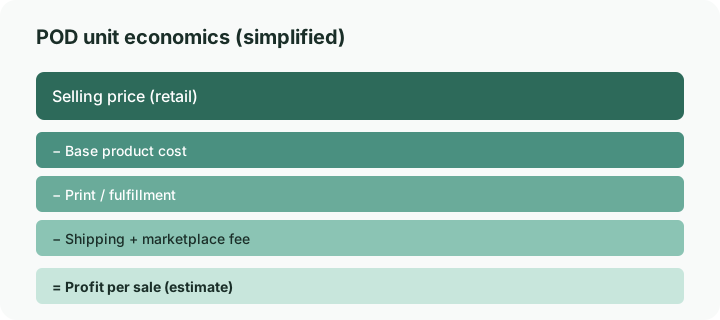
| Base price | Production + platform cost per SKU |
| Artist markup | Your percent on base — paid to you on sale |
| Retail price | Base + markup shown to buyers |
| Optional costs | Design tools or samples you track per sale |
Official sources
Rates and formulas in this calculator reference the documentation below. Confirm current numbers on the source site before relying on them. Links do not imply endorsement by those organizations of Calcometry or this tool.
Common questions
Does Redbubble take a cut of my markup?
Redbubble sets the base price covering production and platform costs. Your markup percentage applies to that base and becomes your artist margin on fulfilled orders. Policies evolve — verify current terms on Redbubble Help rather than relying on third-party summaries. This calculator models base plus markup math; it is not an official Redbubble earnings statement.
Should I enter product cost?
Optional — use the cost field for design software subscriptions, stock photo licenses, sample orders, or ads you allocate per sale. Leave at zero if you only want margin per fulfilled order without amortizing creation time. Heavy Photoshop or font costs spread across expected lifetime sales make optional cost a useful sanity check.
What markup do Redbubble artists use?
Common ranges include 15% to 30% on apparel and 20% to 40% on stickers and prints, but competitive niches may need lower effective prices to move volume. Test per product type in your dashboard — hoodies and phone cases behave differently in search and promotions. Track sales data, not just margin percent.
How do Redbubble sales events affect earnings?
Site-wide promotions may reduce buyer price and your margin on qualifying orders compared to full-price sales. This calculator shows standard pricing outside promo windows. Check seller documentation during sale seasons and adjust income forecasts downward for discounted order share.
Is this official Redbubble pricing?
No. We are not affiliated with Redbubble. Base prices change by product and region — always verify in your Redbubble dashboard before budgeting or comparing against other POD platforms. Use this tool for planning estimates alongside official seller resources.