
Paycheck Calculator
By using our calculators, you agree to our Terms of Use.
Enter gross pay and total deduction % (taxes + benefits) for a rough net estimate.
Rates last reviewed: July 2026
Pay period
Estimated net
$2,400.00
Deductions: $800.00
- Gross
- $3,200.00
Related calculators
Paycheck estimate
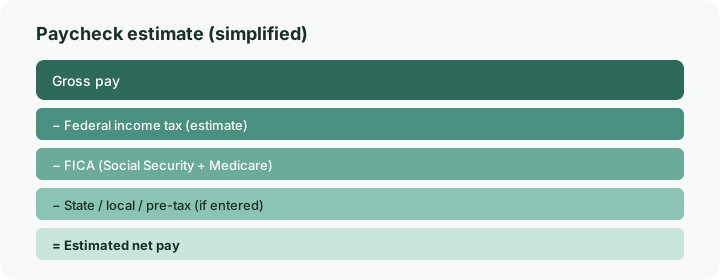
Net pay is what actually reaches your bank account after all payroll deductions. Employers withhold federal income tax, state and local taxes where applicable, Social Security and Medicare (FICA), and often health insurance premiums, retirement contributions, and garnishments. This calculator uses a single total deduction percentage applied to gross pay — a practical shortcut when you already know your effective withholding rate from a recent pay stub.
The IRS W-4 form drives federal income tax withholding for most employees. Your filing status, multiple jobs, dependents, and extra withholding amounts all change the percentage taken from each check. State withholding varies from zero (no income tax states) to double-digit rates in high-tax jurisdictions. Because this tool does not model brackets separately, enter the blended percentage that matches your actual stub — typically 20–35% for many W-2 workers depending on income and elections.
Pre-tax deductions like traditional 401(k) contributions and health insurance reduce taxable income — so your total deduction percentage may look lower than the sum of visible tax lines because some dollars never reach the tax calculation. Post-tax deductions like Roth 401(k) and union dues come out after taxes. If your stub mixes both, the single-percent shortcut still works as long as you derive it from total deductions ÷ gross on a typical check.
Pay frequency affects how much appears on each check but not annual totals. Biweekly pay (26 checks per year) differs slightly from semi-monthly (24 checks) for the same annual salary. Enter the gross for one pay period — weekly, biweekly, or monthly — and the net result applies to that period only. Multiply by your checks per year for an annual net estimate. Two months each year include a third biweekly check, which feels like a bonus but is just normal pay timing.
Bonus and commission checks often withhold at supplemental rates (federal flat 22% for amounts under $1 million, plus FICA), which can look higher than your regular check percentage. Do not use a bonus stub alone to set your deduction percentage — use a typical regular paycheck instead. Equity vesting and severance payouts may use different withholding rules; treat those as separate planning events.
FICA taxes fund Social Security and Medicare at fixed percentages on wages up to the annual Social Security wage base (adjusted yearly by IRS). Above the wage base, Social Security withholding stops but Medicare continues, slightly lowering your effective deduction rate on high earners late in the year. This calculator does not model wage-base step-down — your blended percentage from a stub already reflects it if you enter data from that period.
Worked example with defaults: $3,200 gross pay with 25% total deductions. Deductions = $3,200 × 0.25 = $800. Estimated net = $2,400 per pay period. If your stub shows 28% all-in deductions, change the field to 28 for a closer match — small percentage shifts move real dollars on large gross amounts. At 28%, net would be $2,304, a $96 difference per check that compounds to roughly $2,500 annually on biweekly pay.
Rough net-pay estimates here support budgeting only — not tax advice. This tool does not compute exact federal brackets, state schedules, FICA wage bases, or benefit tiers. For precise tax planning, use your employer payroll portal, the IRS Tax Withholding Estimator, or consult a qualified tax professional. Update your W-4 after major life events such as marriage, a new dependent, or a second job.
Official sources
Rates and formulas in this calculator reference the documentation below. Confirm current numbers on the source site before relying on them. Links do not imply endorsement by those organizations of Calcometry or this tool.
Common questions
Where do I find my deduction percentage?
On a recent pay stub, divide total deductions by gross pay and multiply by 100. Include taxes, benefits, and retirement contributions you want reflected in the estimate. Use a regular paycheck, not a bonus check with supplemental withholding. If deductions vary, average two or three typical stubs from the same tax year for a stable percentage.
Is this tax advice?
No. This is a rough net-pay estimate for budgeting. Actual withholding depends on your W-4, state, local taxes, and benefit elections — see IRS tax withholding resources for adjustment guidance. Year-end tax liability may differ from total withholding if you owe additional tax or receive a refund after filing Form 1040.
Why does my net vary between paychecks?
Overtime, bonuses, benefit changes, and mid-year W-4 updates shift withholding. Salaried workers on biweekly pay occasionally get three-check months that feel different even at the same rate. Pre-tax contribution limit changes, HSA elections, and garnishments also move net pay independently of gross salary.
Does this include employer 401(k) match?
No — employer match is not deducted from your paycheck. Enter only employee-side deductions. Match is separate compensation that does not affect net pay calculation here but does increase total retirement savings. Vesting schedules determine when matched funds become yours if you leave the employer.
Can I estimate annual take-home pay?
Yes — multiply the net result by your pay periods per year (26 for biweekly, 24 for semi-monthly, 12 for monthly). This remains an estimate because deductions and gross may change during the year. Side income, RSU vesting, or a mid-year raise will shift both gross and effective withholding before year end.